What is MND
Find support
I have MND
I am supporting someone
Get involved
All events
© MND Scotland 2026
Research
About MND Scotland
© MND Scotland 2026
Acceptance and Commitment Therapy, often known as ACT, is an evidence-based approach that can help people manage difficult thoughts, feelings and experiences, while staying connected to what matters most to them.
The COMMEND study, led by the University of Sheffield, showed that tailored psychological support can have a major impact on the quality of life of those people living with MND. COMMEND, which was the largest-ever trial of a psychological intervention for people living with MND, found ACT therapy, delivered alongside usual care, can significantly improve quality of life. The study results were published in The Lancet.
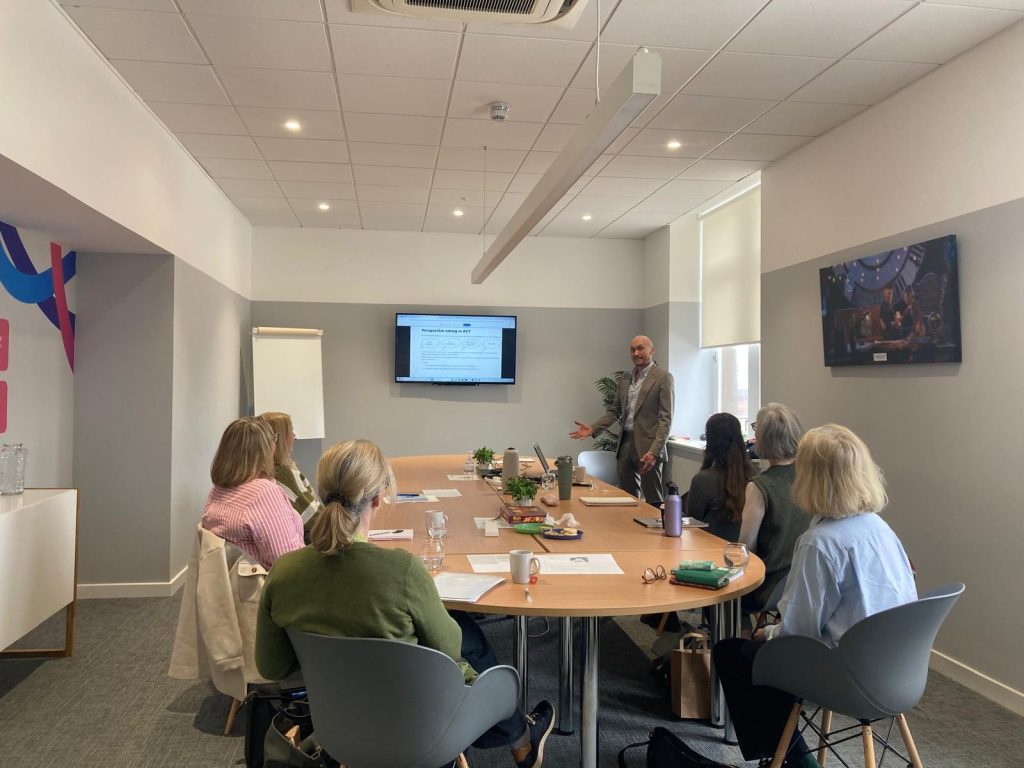
MND Scotland’s counsellors will receive a recognised qualification in ACT Therapy from the University of Strathclyde, plus 18 months of expert-led supervision. The training was delivered by Dr Christopher Graham, who was a member of the COMMEND trial team, and Dr Nils Rickardsson, Professors of Clinical Psychology at the University of Strathclyde.
Nicola Povey, head of support development at MND Scotland, said: “The training was an extremely positive experience for our counselling team and has given them valuable new skills to further strengthen the specialist support we provide to people affected by MND in Scotland. Living with MND can bring huge emotional challenges, not only for the person diagnosed, but also for their families and carers. Having counsellors trained in ACT means we can offer even more skilled, compassionate and meaningful support at a time when people may be facing uncertainty, change and difficult decisions.
“Our counsellors are now trained in ACT and will continue to be supported through ongoing supervision, helping them build on this learning and use it confidently in their work.”
Thanks to the generous donations from supporters, MND Scotland is proud to provide free counselling directly to people affected by MND. This support is delivered by a specialist counselling team, who understand the impact MND can have on individuals, families and carers.
Counseller, Jan Pottinger attended the training: “The areas of focus around values, exploring and acknowledging feelings and being present are all familiar concepts, but it was very interesting to learn about the ways these areas are worked with and can interrelate in ACT towards developing psychological flexibility. I anticipate the impact ACT will bring to my work with clients is around supporting them to live better while managing great uncertainty, with a focus on what matters most to them.”
Counsellor, Heather Davidson also attended the ACT training. She said: “ACT validates difficult and challenging experiences; it asks well placed questions around what matters most – what do you value. ACT is a toolkit, a mindful approach, a way to explore thoughts and feelings, the values you held and still hold dear, to become aware of the present, what matters to you, to nurture ideas for changes no matter how small those changes may seem, changes you yourself can make, in your life. I began using ACT straight away in my practice, finding it to be an excellent theory that just ‘fits’.”
Sign up
for newsletter
Get the latest news and events straight to your inbox.
You can help create a world without MND
Please consider donating to help make time count for people affected by MND.