Home > What is MND ?
What is MND?
You’re likely to have a lot of questions about motor neuron disease (MND) if you or a loved one has been diagnosed with the condition, or you’re worried you may have MND.
To help you get the information you want and need, we’ve answered the questions we’re most often asked about MND.
Also, please remember that you can always contact MND Scotland on 0141 332 3903 or info@mndscotland.org.uk to ask any question you want or simply chat about how you’re feeling.
What is MND?
Motor neuron disease (MND) is the general name given to a group of illnesses which affect nerves called motor neurons, which are present in the brain and spinal cord.
Motor neurons carry signals from the brain directly to the muscles to control movement. In MND, these motor neurons break down preventing these movement controlling signals from reaching the muscles..
Over time, this can lead to muscles becoming weaker until they stop working. This affects a person’s ability to move, speak, walk, eat and breathe unaided, over the progression of the disease..
MND is a rapidly progressing, life-shortening disease. There is currently no cure or meaningful treatment. However, symptoms can be managed to help someone with MND to live the best quality of life possible and make memories with their loved ones.

Please note: The below information contains details about life expectancy. Only read it when you feel ready to do so.
- Support Video
What is MND?
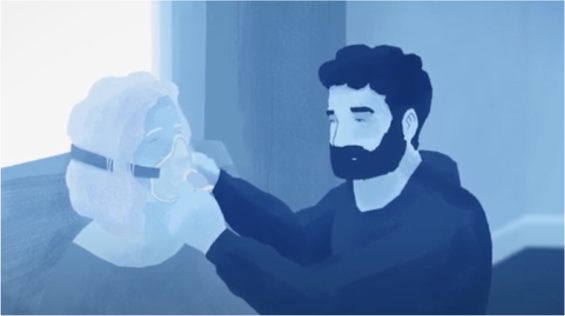
Follow the stories and the experiences of people who have been diagnosed with motor neuron disease (MND) and their carers.
What are the symptoms of MND?
MND affects every individual differently. A person may not develop all the symptoms, and their symptoms may progress at a different rate to someone else with MND. Life expectancy can also vary, depending on the type of MND and the way it affects someone.
A person living with MND may develop some, or all, the following symptoms:
Muscle weakness
Joint and muscle pain
Muscle cramping
Leg and foot swelling
Poor posture and neck control
Speech and communication problems
Sleep and positional problems
Fatigue
Changes to sex life
Eating and drinking problems
Choking
Mucus and excessive saliva
Mouth conditions
Constipation
Breathing problems
Personality and behavioural changes
A small number of people may develop a type of dementia called frontotemporal dementia (FTD). This can lead to severe changes in thinking and behaviour. As a result, appropriate additional support will be needed.

When should I visit my GP?
You should see your GP if you’re experiencing the symptoms of motor neuron disease listed above.
Many neurological conditions have similar symptoms to MND. But getting a correct diagnosis as early as possible is important, as it can help you get the care and support you need.
You should also speak to your GP if a close relative has MND or frontotemporal dementia and you’re worried you may be at risk of developing the condition. Your doctor may refer you to genetic counselling to talk about your risk and the tests you can have.
Are there different types of MND?
Depending on the way symptoms present, a person may be diagnosed with a specific type of motor neuron disease. The four main types of MND are:
ALS is the most common form of MND and affects upper and lower motor neurons. This means you may experience muscle weakness and muscle stiffness in any part of your body.
Although the majority of people diagnosed with ALS are aged over 40, about 10% are younger.
Generally, ALS progresses much slower in people aged under 40 than in older age groups.
The average life expectancy for someone diagnosed with ALS is two to five years from the onset of symptoms.
About 20–25% of people living with MND are diagnosed with progressive bulbar palsy (PBP). This type of MND mainly affects the muscles of the face, throat and tongue.
Early symptoms of PBP normally involve the slurring of speech or swallowing difficulties. You may also have problems with the thickness or amount of saliva you produce.
Progressive bulbar palsy is a term reserved for MND that only affects a group of muscles in the head and neck (the bulbar muscles). If you have problems with the bulbar muscles first and then develop problems in the arms or legs, this is likely to be diagnosed as a form of ALS, rather than PBP.
The average life expectancy for someone diagnosed with PBP is six months to three years from the onset of symptoms.
About 5–7% of people living with MND are diagnosed with PMA. This type of motor neuron disease affects the lower motor neurons and causes muscle wasting (atrophy) and weakness, loss of weight and muscle-twitching.
About 56% of those diagnosed with PMA are alive five years after their diagnosis.
Primary lateral sclerosis is a rare type of motor neuron disease and only 1–2% of people living with MND are diagnosed with it. PLS affects the upper motor neurons and causes increased muscle tension. This results in stiffness of the limbs, and especially in the legs.
This form of MND typically affects people over the age of 50 and progresses slowly. People living with PLS can generally live a normal lifespan, with survival of up to 20 years after symptom onset.
Is MND inherited?
9 in every 10 cases of MND are sporadic, meaning the person has no family history of the condition or genetic link. However, 1 in every 10 people who develop the condition have inherited an altered gene that is known to increase their risk factor of developing MND. This 10% of cases can be known as inherited or familial MND.
You can find out more information about inherited MND here.
The C9orf72 gene provides the instructions for a protein found in brain and spinal cord motor neurons that is important for cell maintenance. When there is a change in this gene it leads to toxic material building up in neurons, which disrupts how cells function.
According to a 2024 paper into the genetic landscape of MND in Scotland, 32.1% of those with familial MND had a change in their C9orf72 gene. This MND associated gene change was discovered in 2011 and is also known to be associated with Frontotemporal Dementia (FTD).
The SOD-1 gene provides instructions for an enzyme which helps break down toxic byproducts of normal cellular metabolism. However, when there are changes in the SOD-1 gene the resulting product can be toxic.
According to a 2024 paper into the genetic landscape of MND in Scotland, 21.4% of those with familial MND had an abnormality in their SOD-1 gene. This MND associated gene change was identified in 1993 and is the target of tofersen.
FUS protein is normally found in the nucleus of cells and plays a key role in the management and processing of other genes. When genetic changes lead to faulty FUS proteins being made, they can travel out the nucleus and form toxic clumps in the cytoplasm.
FUS gene changes are found in about 5% of familial MND cases. This MND associated gene change was identified in 2009.
The TARDBP gene provides the instructions for TDP-43 protein that regulates the use of other genetic information in cells. When genetic changes lead to faulty TDP-43 proteins being made, they can travel out the nucleus and form toxic clumps in the cytoplasm.
TARDBP gene changes are found in about 5% of familial MND cases. This MND associated gene change was identified in 2008.

How quickly does MND progress?
MND affects everyone differently, so it can be difficult to say definitively how long someone will have the illness for. It will also depend on what type of MND you have (see above).
Generally, the longer the time between first symptoms and diagnosis, the slower the
condition is progressing.
What are the treatments for MND?
Currently, there is no cure for MND. However, there is a drug called riluzole (Rilutek®) that is used to slow the progression of the ALS form of MND. Your consultant will offer you this treatment if it’s appropriate for you.
You can also speak to your MND clinical nurse specialist about how symptoms and any other problems can be managed.
We are key funders of the UK’s biggest ever MND clinical drug trial - MND-SMART - which aims to find meaningful treatments for MND.

Why have I developed MND?
It’s not known why some people develop MND and others don’t. It is thought that a number of factors may increase a person’s risk of MND, but what triggers the disease to develop is not yet known. Some of these risk factors include high exposure to certain chemicals (e.g. pesticides), head injury and genetics, amongst others.
Around the world, there’s a lot of research being carried out to understand how MND develops and identify new treatments for the condition. MND Scotland funds research that is part of the global effort to learn more about MND and what causes it, so treatments can then be developed.
You can help support this work by signing up to be part of CARE-MND, a register of people living with MND in Scotland, which is used for monitoring and research purposes.

Why can it take so long to get a diagnosis?
MND is an extremely difficult condition to diagnose in its early stages because few cases follow exactly the same pattern. Which muscles are affected, the order in which they are affected and the way they are affected can vary so much that there are almost no rules to help predict how any one case will develop.
The symptoms presented in MND can also be seen in other conditions that affect the nerves and muscles. There is currently no definitive diagnostic test for MND, although research is progressing in this area. So, this means that to get an MND diagnosis a neurologist must rule out all other potential causes for the symptoms until MND is left as being the most likely cause.

Can MND be passed on to others?
MND is not infectious but a small number of cases are inherited, i.e. run in the family. This type of MND is called familial MND and it affects between 5–10 people in every
100 cases.
If you have familial MND, it’s likely that blood relatives have been affected by the condition in the past.
If yours is the first case of MND in your family, then you probably have what is known as sporadic MND.
Around 9 out of 10 cases of MND are thought to be sporadic.
Support for people living with MND
Learn more about all the support and services we offer to help people living with MND understand their illness, prepare for the future and have a good quality of life.

Support for carers
If you care for someone living with MND, we are here to support you too. Find out more about our free wellbeing, practical and financial services.