What is MND
Find support
I have MND
I am supporting someone
Get involved
All events
© MND Scotland 2026
Research
About MND Scotland
In MND, motor neurons, the cells that carry movement signals from the brain to muscles, are damaged and eventually die. A protein called TDP-43 is known to stop working properly in up to 95% of people with the condition. Recent research has shown that this indirectly affects the production of another protein, stathmin-2 (STMN2). STMN2 is vital for motor neuron health, and when its levels fall, motor neurons lose their connection to muscles, leading to the symptoms of MND. Preventing the decline of STMN2 is therefore a potential target for slowing disease progression.
Some dysfunctional proteins seen in MND are considered poor drug targets because they lack structures suitable for small-molecule binding. Instead, this project explored RNA (the instructions for creating proteins in cells) as a drug target — an approach that has already proven successful in other neurological conditions, such as spinal muscular atrophy. The team aimed to develop a cell-based testing system capable of analysing thousands of small molecules at once to see if they could correct STMN2 RNA levels. They succeeded in creating a tool to establish this system, known as an STMN2 “reporter”, though further validation is needed as STMN2 regulation by TDP-43 is an incredibly complex process.
Alongside this, the researchers investigated how STMN2 is regulated in neurons under stress, since stress is an important factor in MND. They found that when cells are stressed, TDP-43 gathers into clusters inside the nucleus, which stops it from working properly and leads to a drop in STMN2 levels. They also uncovered unexpected links between two hallmarks of MND — STMN2 dysfunction and stress granules, which are small clusters of protein and RNA often seen in affected neurons. Finally, they showed that chemical modifications on RNA can also influence STMN2 processing, opening new avenues for therapeutic development research.
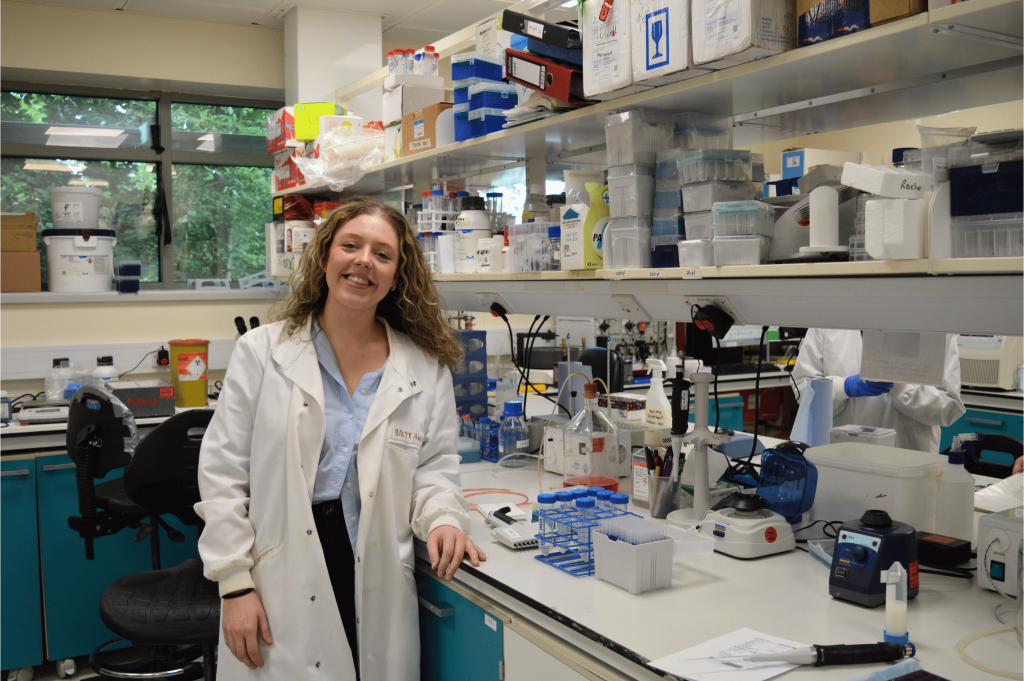
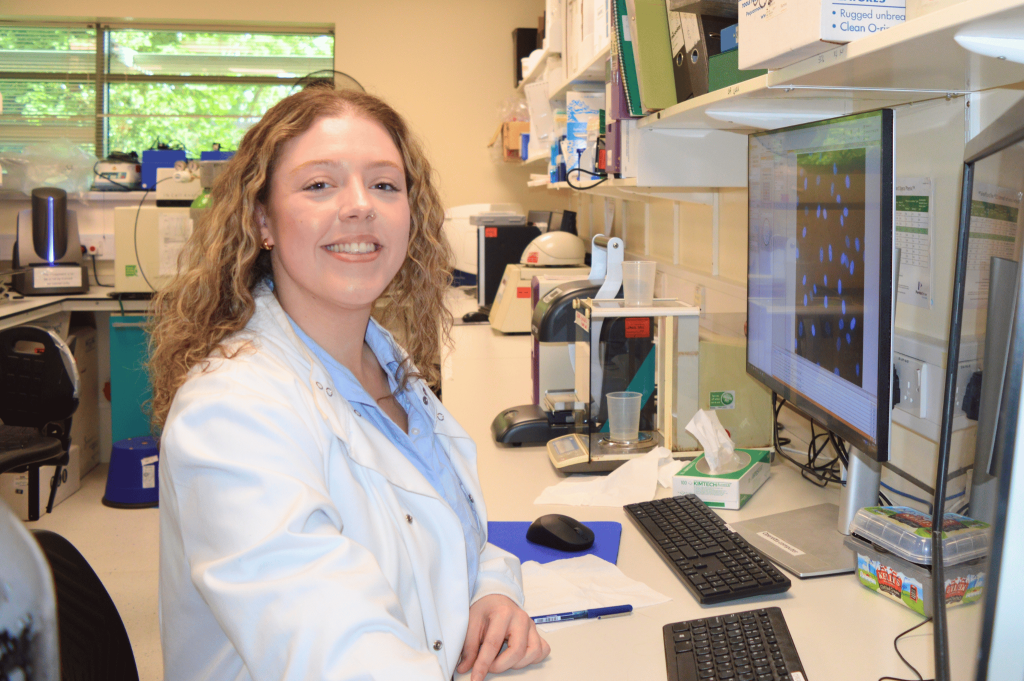
With the support of Tatyana, work on this project was carried out by Brittany Ellis, the PhD student supported by the grant. Thanks to this grant, Brittany has now achieved her PhD, published work as a first author, presented at international conferences, and secured a research assistant position to continue her career in MND research as part of Tatyana’s lab.
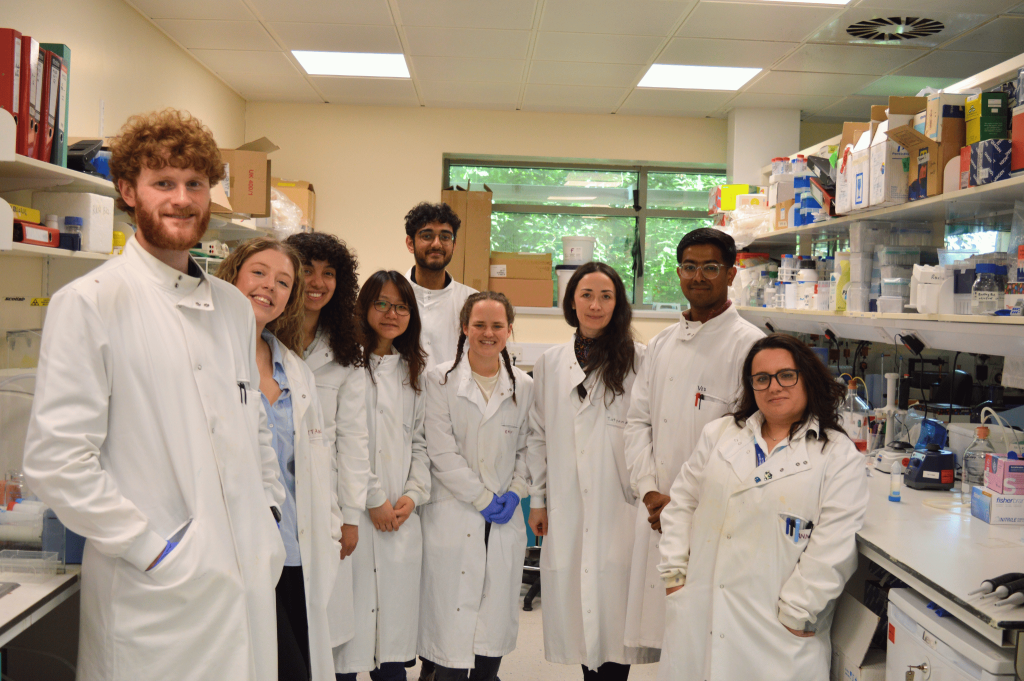
Brittany Ellis, PhD student, said, “Overall, this project has provided important insights into how STMN2 is regulated and why its loss is so damaging in MND. These findings can help inform future drug discovery efforts aimed at restoring STMN2 levels and could help deliver disease-modifying therapies for several subtypes of MND in the future.”
Tatyana said, “In this project, we have discovered an unexpected link between RNA metabolism and a molecular target downstream TDP-43, STMN2. Giving promising results of the STMN2 therapy trial, it is important to gain deeper understanding of how STMN2 functions and how we can further improve therapies targeting this protein. We have also developed an important screening and research tool for STMN2. I am really pleased to see how Brittany has grown as a researcher during this project and delighted that she chose a career in MND research. This would not be possible without this funding and generous support of MND Scotland donors.”
Dr Jane Haley MBE, Director of Research and Interim CEO for MND Scotland, said, “This project has provided valuable new insights into how STMN2 is disrupted in motor neuron disease and highlights important areas for further investigation. While there is still much to learn, studies like this help to build the evidence base needed to inform future therapeutic approaches.
We are particularly pleased that this grant has supported the development of an early-career researcher, with the PhD student continuing in MND research and contributing to the next generation of scientific expertise in this field.
MND Scotland is grateful to all of our fundraisers and donors. It is only through their continued support that we can invest in vital research and drive progress towards our vision of a world without motor neuron disease”.