
What is MND
Find support
I have MND
I am supporting someone
Get involved
Research
About MND Scotland
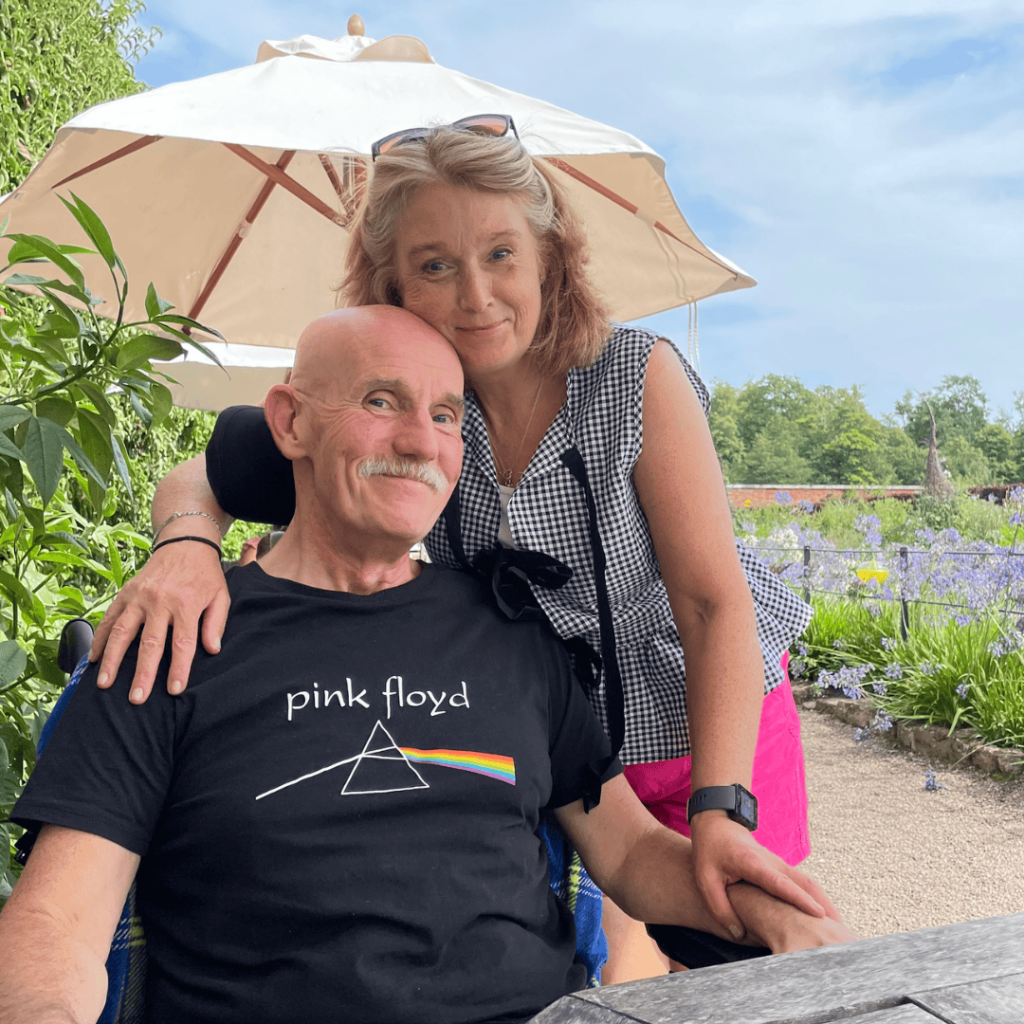
“People with MND don’t have a year to wait. We don’t even have months. The system moves at the pace of paperwork, but my husband is losing his mobility every week.”
Lynda Gilroy, from Darnick near Melrose, cares full‑time for her husband Bill, 66, who was diagnosed with MND in October 2024. She says the system is failing people with rapidly progressing, life‑shortening conditions, leaving families in fear, distress, and physical danger.
MND is a rapidly progressing terminal neurological illness, which stops signals from the brain reaching the muscles. This causes muscle weakness and wasting.
MND can rob someone of the ability to walk, talk, swallow and breathe. The average life expectancy of someone with MND is just 18 months from diagnosis. There is no cure or meaningful treatments.
For Lynda and her husband Bill, the speed of the disease has been devastating and made worse by delays, confusion, and barriers across local services. Their experience highlights what can happen when systems built for everyday cannot meet the needs of people facing a terminal disease like MND.
Before his diagnosis, Bill was experiencing falls, severe pain, foot drop, and a sudden decline in mobility. By January 2025, just three months after diagnosis, he had lost the ability to walk and required a wheelchair full‑time. Lynda said: “It was getting really bad. His legs would just go from under him. It was just awful.” Bill’s MND has progressed significantly, and he now struggles with movement in his arms.
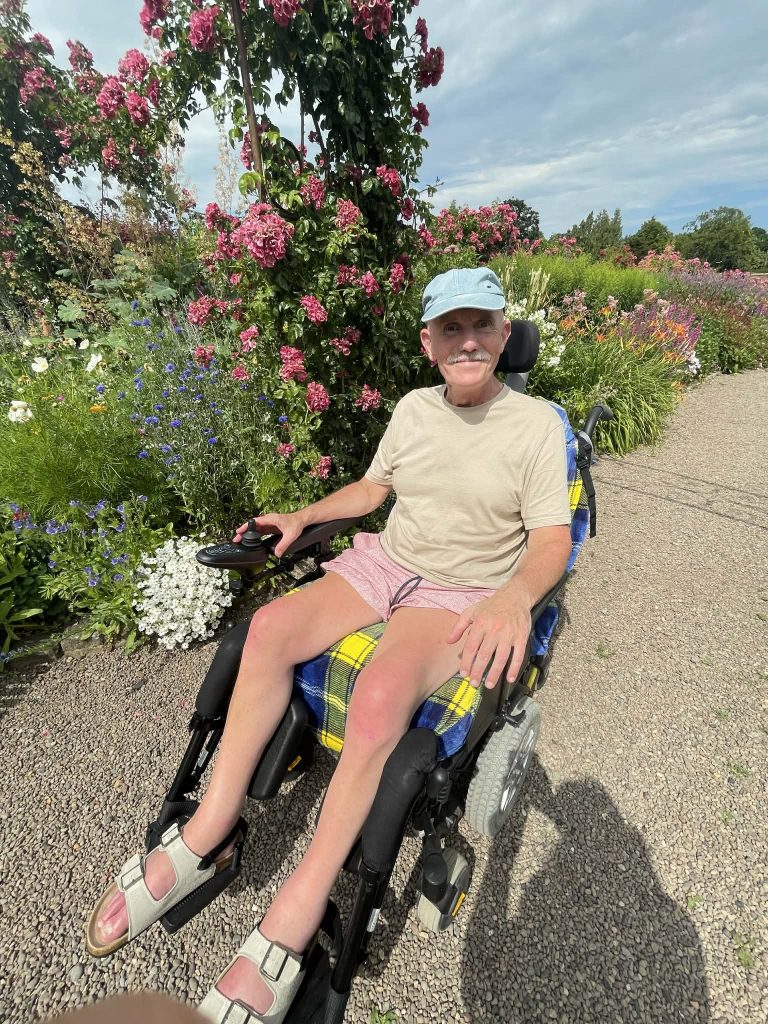
Despite the progression of the disease, Bill has faced the challenge head-on. Lynda said, “He’s just accepted it. He remains upbeat and is dealing with it in the best way he can.”
For families like Lynda and Bill’s, one of the most distressing parts of journeying through a disease like MND is the system around it. Despite Bill’s MND diagnosis, home adaptations, including an accessible bathroom, took over a full year to begin. During this time, Lynda repeatedly chased multiple teams, often hearing nothing back and receiving inconsistent information about planning, permissions and timelines.
Lynda and Bill were told that adaptations had been approved in early 2025: “It took a year for the bathroom to get finished. My husband couldn’t shower for all that time. Throughout the process, we were repeatedly told ‘It just takes time; we’ve got to prioritise’. They would never give us a timescale. They just said it takes time – something we don’t have.”
A commode chair for Bill was delivered in the wrong size, meaning it could not fit through their bathroom door. Despite explaining that it was an emergency, Lynda received no response from occupational therapy for four days.
She said, “My husband couldn’t go to the toilet. It was Friday afternoon. Nobody called me back. I ended up putting the chair in the car myself and driving to the store to sort it out myself. I shouldn’t be having to go there, but the staff were fantastic. Other people might not have done that or known where to go.”
The only access path to the home became dangerously unusable and raised safety concerns. Bill’s wheelchair barely fits, and Lynda needs to force it through the narrowing sections of the path physically. She said, “I literally have to shove the wheelchair to get it through. It’s not good, and it’s not nice for Bill. Decisions and updates were unclear, contradictory, or non-existent. There was no communication. I had to chase them constantly. Nobody called to say, ‘We know you’re still waiting.’ Not once.”
She added, “Initially, we were informed that the planning permission was approved, but later we were told that this was not the case and that nothing had actually been approved. This update came one or two months after we thought planning permission had already taken place.”
Worried about fire safety, she asked the fire service what to do in an emergency, “If I have a fire in this house, I asked how to get my husband out safely. They told me: ‘You don’t. You shut the bedroom door, open a window for fresh air and wait to be rescued which could take up to half an hour’.”
Lynda contacted her local MSP and Council, but action has yet to take place, “The system needs to be rebuilt. Families should not have to shout and fight for basic safety. People with MND have limited time, and the system is stealing it.”
From quality of life, through to the financial costs, the impact of MND on an individual and their family is enormous.
Lynda and Bill have so far paid around £4,000 for home adaptions. Lynda left her job as a hotel sales manager once Bill received his diagnosis, “I gave up a decent salary to get £333 a month on carers payment. We had to pay thousands for adaptations we then waited a year for. What about families who don’t have the money?”
Speaking about caring responsibilities, Lynda said, “Being a full-time carer is undoubtedly the hardest job I’ve ever done. It’s seven days a week, 24 hours a day. I get maybe an hour and a half off to do my shopping. Our children visit weekly which is lovely, but Bill doesn’t want them doing anything in terms of his care, which is understandable.”
Lynda is determined to use her voice to prevent others from facing what she and Bill have endured, “I want the process to be changed because I don’t want other people to go through what we have experienced.”
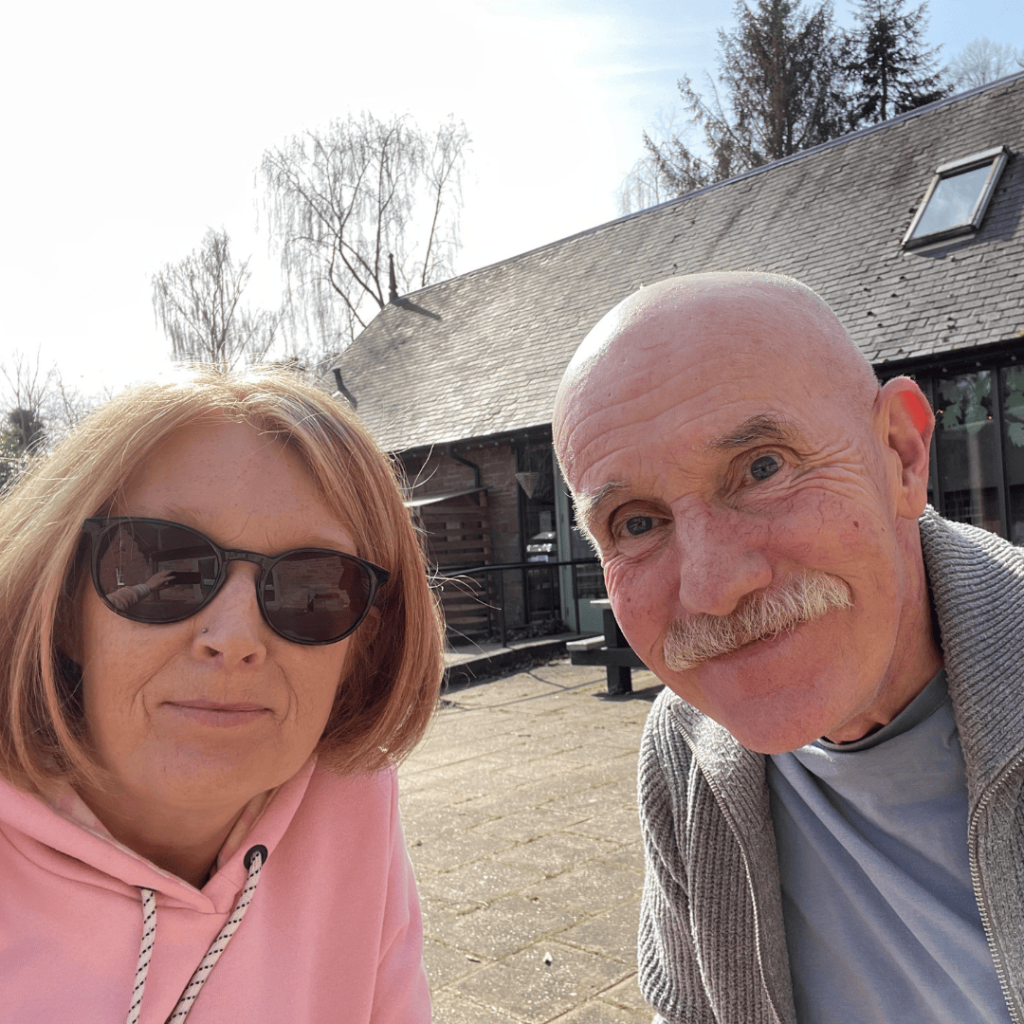
When asked what message she’d give to decision‑makers, she said, “Understand what MND is. If you need a change done in your home, you need it done now. You don’t need it done in a year because you might not be there. Are you going to have time to use them?”
She added, “Nothing will change in time to help Bill. But if telling our story helps save one other family from going through this, then it’s worth it. We need change. Urgently. So, keep shouting. Shout as loud as you can.”
Ahead of the Scottish Parliament Elections in May 2026, MND Scotland has appealed to the next Scottish Government to legislate and recognise the urgent statutory rights and needs of those with terminal illnesses like motor neuron disease.
The charity is calling on the next government to deliver: invested in, and fast-tracked, housing and adaptations; fast- tracked social care; and increased, targeted funding for neuro-progressive conditions.
Dr Jane Haley, interim CEO at MND Scotland, said, “Lynda and Bill’s story is sadly not an isolated case, and that is unacceptable. People with MND need support now, not in a year. The system urgently needs to recognise the rapid progression of this disease and act at pace.
“We need a Scotland where no one with MND is left without the support they are entitled to. We want families like Lynda and Bill’s to be able to focus on making memories and making time count, rather than waiting for statutory services and support which might never arrive in time.
“Our 2026 manifesto highlights the rapid speed with which MND progresses, and the devastating impact this has on those with the illness. Statutory services – services which should be provided by law – particularly in areas such as housing and social care – are needed quickly, but too often these systems can’t keep up with the speed of deterioration, leaving people with MND and their families struggling”.
MND Scotland would like to thank Lynda and Bill for bravely sharing their story.
To read MND Scotland’s 2026 Manifesto, please click here.
To read and sign our open letter, please click here.
“We shouldn’t be having to fight for this. We just want it fixed”, Lynda said.