What is MND
Find support
I have MND
I am supporting someone
Get involved
Research
About MND Scotland
What’s new?
© MND Scotland 2026
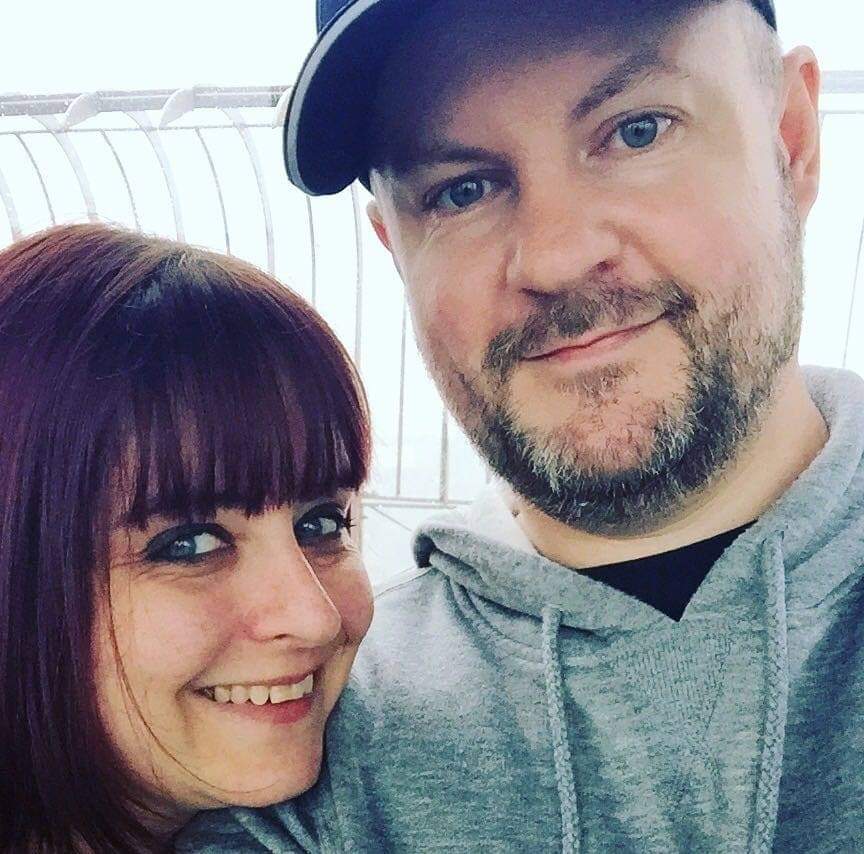
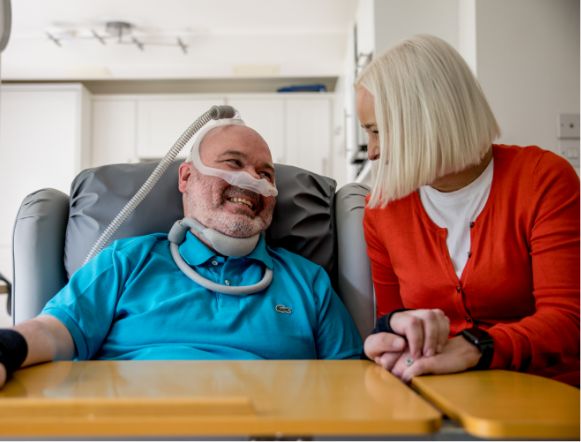
Billy Mitchell lived with ALS (amyotrophic lateral sclerosis), a type of motor neuron disease (MND), for just over three years before he died on 3 March 2024, aged 50 years old.
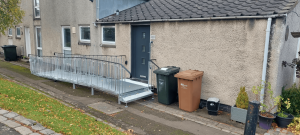
Billy and Lisa lived in a single level terraced home with two steps leading to their front door. This became an immediate barrier once Billy began to lose mobility.
Their home was situated on land that had once belonged to a private housing association. Billy and Lisa owned one metre of pavement in front of the house but needed a few extra inches to accommodate a ramp outside their home to allow safe access for Billy.
Despite repeated requests, phone calls, and emails, the couple waited 17 months for the ramp to be installed at the front of their home. By the time it was installed, Billy used the ramp twice as he had deteriorated to the point where he was no longer able to use it independently.
While Billy and Lisa were continuing to chase up and advocate for the ramp they desperately needed, the couple temporarily used a foldout ramp which they purchased themselves. It was heavy, unstable, too steep, and had to be put away after every use. Their occupational therapist assigned Billy a stair climber device, but they rejected this.
Lisa said. “Billy was terrified when we used it because he didn’t feel safe. We immediately said no. We need something else”.
Lisa was also fearful in case a fire started, as she would not be able to get Billy out safely. “We couldn’t leave the ramp permanently at the door because it was a trip hazard”, she said. “If something had happened, like a fire, he couldn’t have got out. He would have been trapped.”
Due to some family emergencies Lisa had no other choice but to leave Billy alone at times, knowing he had no safe way to exit the house unaided if anything happened while she was gone.
A system that moves too slowly for MND
The path to the ramp became an ongoing situation between the council and the former housing association.
Lisa believes the first request for a ramp may never have been submitted, “We suspect that the original occupational therapist didn’t put the initial request for the ramp when we rejected the stair climber, as the second OT we dealt with was amazing, but had to start from the beginning with the request when she was assigned to us. This was eight months later.
“People caring for loved ones with MND should be able to focus on providing care and comfort. They shouldn’t have to spend over a year communicating with the council just to get a temporary ramp installed.”
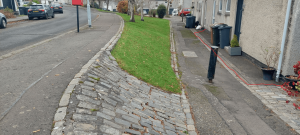
When the application finally progressed, her local council did not grant permission because there was an uncertainty of who owned the 16 inch strip beside the house. The housing association insisted the land had been transferred to the council years earlier, but the council insisted it was still in the possession of the housing association who had previously owned the land. For months, neither party could agree.
MND Scotland, the local community council, and the Lord Provost of Edinburgh became involved. Lisa said: “The Provost was our local councillor and was emailing at least once a month, but still nothing was happening. There was a lack of transparency. No updates given, no timelines. You’re left continually trying to chase because invariably there’d be a crisis and I would think to myself, ‘I’d better check for that ramp again.’”
When installation was finally scheduled, the contractors didn’t arrive, “We were sitting there thinking, right, this is it, and the people just didn’t turn up. That was probably the worst day.
“Billy said he felt like giving up on life. Not because of the MND that he’d been diagnosed with a year earlier, but because we’d now been waiting 14 months from when we’d initially requested permission to install a ramp, and there was no viable solution in sight.”
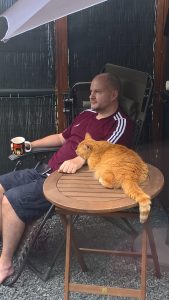
As months passed with no progress, Billy’s independence slipped away. “He basically spent every day sitting in a chair in the living room”, Lisa said. “That was his world.”
Billy had some upper body function during the earlier months of waiting, meaning that he could have used a power chair which would have given him significant independence and would also have let him get exercise to recover from 2 pulmonary embolisms he experienced in that time. Lisa added, “Had he had the ramp earlier, he could have had independence for a bit longer. But he couldn’t get himself out without help. It had an impact on his mental health. His world became very small, very quickly.”
Billy became increasingly reluctant to go outside at all. He was embarrassed, exhausted, and discouraged, “He didn’t want to go out anymore because it felt like too much bother. It had a big impact on him.”
Why Lisa is speaking out
Despite their efforts, it was a further three month wait to make progress.
“We were very lucky to get support from MND Scotland, not just with advocacy to help progress the ramp situation, but also with will writing, advice on grant funding, and we were given a neater eater which helped Billy keep a level of independence, critical to his mental health at the time. After Billy’s death I also received bereavement support through the MND Scotland Bereavement workshop, and I now volunteer with MND Scotland. Through speaking with others, it seems very clear to me that many people living with MND need a certain core set of equipment, adjustments and care.”
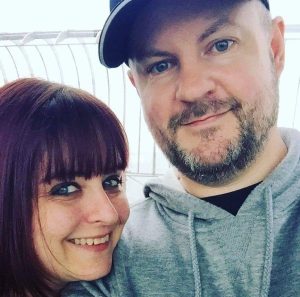 Lisa added, “Throughout Billy’s care, we needed a lot of equipment and support and we received a hospital bed and specialist hoists that allowed me to care for him at home alone, as well as transfer chairs, walking aids, a ventilator, cough assist, suction device and humidifier mask. Unlike the ramp almost all of this equipment was provided as soon as we needed it, but others are not always as lucky.”
Lisa says Billy wanted his story to be shared to help others.
She hopes that speaking out now, two years after his death, will help ensure no one else has to go through what she and Billy went through, and so that no one loses precious time or independence due to preventable delays.
Moving forward
Ahead of the Scottish Parliament Elections in May 2026, MND Scotland has appealed to the next Scottish Government to legislate and recognise the urgent statutory rights and needs of those with terminal illnesses like motor neuron disease.
The charity is calling on the next government to deliver: invested in, and fast-tracked, housing and adaptations; fast- tracked social care; and increased, targeted funding for neuro-progressive conditions.
A call for urgent change
Lisa is clear about what she wants decision makers to understand: “The ideal world would be a joined up, proactive package of support from diagnosis. We were in a more fortunate position than a lot of people, because we got most of our equipment at point of need, but the situation with the ramp was unacceptable and far harder than it should have had to be.”
Lisa added, “People with MND shouldn’t have to wait nearly 18 months of their remaining three years of life feeling vulnerable and unsafe because their request for a ramp has “got lost” in planning.
“There’s no space for unnecessary and additional stress and upset in the lives of people living with MND. People with MND don’t have time to wait to receive help, MND moves rapidly and it’s vital that the process for requesting the correct accessibility measures starts immediately on diagnosis. There needs to be a request process that assesses and commences accessibility provisions as soon as the person is diagnosed.”
MND Scotland would like to thank Lisa for bravely sharing her story.
To read MND Scotland’s 2026 Manifesto, please click here.
To read and sign our open letter, please click here.