
What is MND
Find support
I have MND
I am supporting someone
Get involved
Research
About MND Scotland

The Gordon Aikman Scholarship was set up by MND Scotland and the Scottish Government in 2017, in honour of the late MND campaigner Gordon Aikman, to fund research and developments into improving care and support for people living with MND.
Environmental controls (ECs) are assistive technologies that can be controlled in several ways, for example using switches to operate electronic devices in a person’s home. ECs can be used by people living with MND to help them carry out some daily activities as independently as possible. For conditions where a person’s needs are frequently and rapidly changing, such as MND, timely and adequate provision of ECs is essential to provide that independence where possible.
In Scotland there is significant inequality between health boards in the provision of EC equipment. In some areas, the EC service can meet the changing needs of MND patients without delay. However, this is unfortunately not experienced across the country, with some areas reporting ECs are provided too late for people with MND, or in some cases, not at all. Contributing to these inconsistencies is that the current guidance for the provision of ECs was written in 1990 and is no longer compatible with advances in technology.
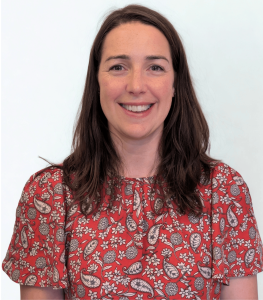 Dr Bolton is a Senior Clinical Scientist in Rehabilitation Engineering, she has worked in assistive technology for over ten years, across three Scottish NHS boards. Dr Bolton’s project will audit the current Scottish EC provision for people with MND and investigate new service models that could be implemented to improve EC provision. By mapping the EC services across Scottish health boards, she hopes to collect information about where some services are doing well, and where there are gaps. She will then supply these findings to the departments involved in EC provision, and the Scottish Environment Controls Group, to encourage collaboration between these parties to review and improve EC services. The hope is that this can lead to more equitable and effective EC provision for people with MND across the country.
With more people living with MND in Scotland than ever before, equitable nationwide access to equipment that can help support independence is vitally important. This project will give a better understanding to how best to bring EC services into the 21st century and ensure equitable provision across Scotland for those living with MND.
Dr Jane Haley, interim CEO and director of research at MND Scotland, said: “MND is a rapidly progressing disease that severely impacts on people’s ability to live independently. Environmental controls allow people to live as independently as possible for longer, and it is important that everyone with MND in Scotland has equitable access to these technologies. Improving quality of life is key to making time count for people living with this brutal disease and that’s why we fund research like Dr Bolton’s.”
Public Health Minister, Jenni Minto, said: “Environmental controls really improve the quality of life for people with MND. It is vital that everyone is able to access these technologies quickly, no matter where they live, to help people live as independently as possible. That is why we are supporting Dr Bolton’s project, in partnership with MND Scotland, to make a difference and meet the changing needs of patients.”
Dr Megan Bolton, said: “Environmental Controls, when installed correctly and supported with appropriate training, can have a profound impact on an individual’s quality of life. For those experiencing increasing frustration due to loss of independence, EC systems can help restore autonomy, reduce frustration, and enhance daily living. With rapidly advancing digital technology, there is enormous potential for Environmental Controls to offer even greater support. However, significant service inequalities across Scotland mean that many individuals are currently unable to access this equipment and technology easily. I hope this project will help address these disparities and ultimately improve the quality of life for many people.”